


The Bourse de Commerce – Pinault Collection: How Tadao Ando Slipped a Circle Inside a Circle
Some buildings have the rare capacity to absorb centuries without ever appearing weighed down by them. The Bourse de Commerce, sitting on the Rue de Viarmes since the 18th century, is one of those places. Today a contemporary art museum and home to the Pinault Collection, it plays host until 24 August 2026 to Clair-obscur — an exhibition as demanding as the space that contains it. To walk in here is to cross five hundred years of history in a matter of steps.
Clair-obscur: What the Museum is Currently Showing
From 4 March to 24 August 2026, the Bourse de Commerce transforms itself into a landscape of light and shadow. The exhibition Clair-obscur, curated by Emma Lavigne, Director General of the Pinault Collection, brings together around twenty artists around a shared intuition: that the defining quality of the contemporary gaze is its ability to perceive not brilliance, but darkness. The idea is borrowed from the philosopher Giorgio Agamben, who defines the contemporary as one who dips his pen into the shadows of his era in order to better understand it.
The journey begins with an impact. In the central Rotonde, beneath the museum's overhead dome, Pierre Huyghe presents Camata — a work filmed in the Atacama Desert in Chile, where the boundaries between the living and the non-living, the real and the fictional, dissolve slowly before your eyes. It is hypnotic, slightly vertiginous, and perfectly in tune with the space around it.

In the Passage — the circular corridor left between Ando's concrete cylinder and the historic walls — Laura Lamiel has taken over each of the twenty-four vitrines with a personal installation. Found objects, steel, fluorescent tubes: a raw vocabulary in service of a highly constructed intelligence, drawing on psychoanalysis and spiritual cosmology.
Gallery 3 belongs entirely to Romanian painter Victor Man. His canvases occupy a blue-green half-darkness haunted by spectres and apparitions — enigmatic figures suspended between the everyday and the universal, between pictorial seduction and an obsession with death. An exhibition within the exhibition, of rare coherence.
Among the other artists present: Frank Bowling, Jean Dubuffet, Alberto Giacometti, Bruce Nauman, Philippe Parreno, Germaine Richier, Wolfgang Tillmans, Danh Vo, Yves Tanguy, Sigmar Polke, Rosemarie Trockel, Alina Szapocznikow — a list that speaks for itself. And from June onwards, Fujiko Nakaya's fog installation will spill into the Rotonde, adding an additional sensory layer to an already very physical experience.
The Building Before the Works: An Architectural Lesson in Itself
Before looking at the works on the walls, take a moment to look at the space that holds them. At the Bourse de Commerce, the container is itself a subject worth studying.
At the centre of the rotunda stands a concrete cylinder. Nine metres high, thirty metres in diameter, four symmetrical openings. Simple in appearance, absolutely precise in execution. This is the signature of Tadao Ando — winner of the Pritzker Prize in 1995 and one of the most influential living architects in the world — who conceived this intervention as a direct response to the geometry of the existing building. Inside the circle, he slipped another circle. The form holds a conversation with itself.

The cylinder wall is not a simple partition. It is made up of 863 concrete panels whose layout takes its proportions from the Japanese tatami. The tie holes — perforations usually plugged once the formwork is removed — have been left deliberately visible here, treated as an honest constructive detail. The concrete is handled as a material in its own right: textured, sensitive to the light that shifts throughout the day. A living skin, as Ando himself described it.
The structural feat is considerable. To insert this cylinder without touching the 19th-century fabric, engineers had to reinforce the floors — which now bear up to 700 kilograms per square metre, compared to 250 previously. The ground-floor cast-iron columns were restored to their original state, some recast by a specialist foundry in the Val-d'Oise using traditional techniques. Everything was designed to be reversible: should the fifty-year lease ever come to an end, the entire installation could theoretically be dismantled without leaving a mark on the listed building.
Around the cylinder, the concrete staircase serving the four exhibition levels coils slowly through the space. From the upper walkway, the view across the dome's frescoes — 1,400 square metres of allegorical painting on world commerce, dating from 1889 — is breathtaking. The 2,100 square metre glazed roof, restored with modern thermally insulating glass, floods the interior with natural light that reshapes the space across the hours. It is here that Ando's thinking makes its full impact: for him, architecture is only complete when light inhabits it.

François Pinault and the Constellation of Three Museums
This Parisian project did not emerge from nowhere. It is the culmination of a long partnership between François Pinault and Tadao Ando, stretching back to the early 2000s.
After abandoning a planned foundation on the Île Seguin in Boulogne-Billancourt — a project dropped for lack of political support — Pinault turned to Venice. The Palazzo Grassi opened in 2006, the Punta della Dogana in 2009. In both cases, it was Ando who intervened, guided by the same philosophy: not to erase the existing building, but to inscribe within it a strong, reversible contemporary gesture. At the Punta della Dogana, the former customs warehouse at the tip of the Grand Canal becomes a space for moving through the collection, opened onto the lagoon by its arched half-moon windows. The dialogue between Venetian heritage and Japanese concrete is one of quiet elegance.
Paris is the third chapter in this constellation. In 2016, the City of Paris offered Pinault a fifty-year lease on the Bourse de Commerce, which had been without a clear purpose for years. The construction site opened in June 2017. Three years were needed to transform the space, reinforce the structure, restore the historic interiors and build the cylinder — in the heart of Paris, without cranes, inside a listed monument. The museum finally opened in May 2021, a few months behind schedule due to the pandemic.
Three cities, three historic buildings, one architect, one collection. What François Pinault has built here looks less like a network of museums than an argument about how contemporary art can cohabit with the long duration of history.

Five Centuries in a Few Square Meters
It would be impossible to leave without acknowledging what came before Ando and Pinault — and what gives the place its particular density.
The site has a long story. In the 16th century, Catherine de Medici had her Parisian residence built here, along with a thirty-one-metre astronomical column still visible today, adjoining the current building — most likely used by her personal astrologer. In 1763, the City of Paris decided to build a circular grain market on the site, designed by architect Nicolas Le Camus de Mézières — and it is here that the round form first asserts itself. In 1783, a thirty-eight-metre dome was added to cover the structure, a technical feat compared at the time to that of St Peter's in Rome.
In the 19th century, the building became the Bourse de Commerce. Architect Henri Blondel enriched it with monumental frescoes, grisailles and a sculpted entrance portico. Agricultural commodity markets animated the ground floor for decades. Then the computerisation of trading gradually emptied the building, which drifted through a long sleep — business support centre, polling station, community hall — before Pinault and Ando finally found it its definitive form.
Knowing all of this, you walk in differently.

At the Gift Shop
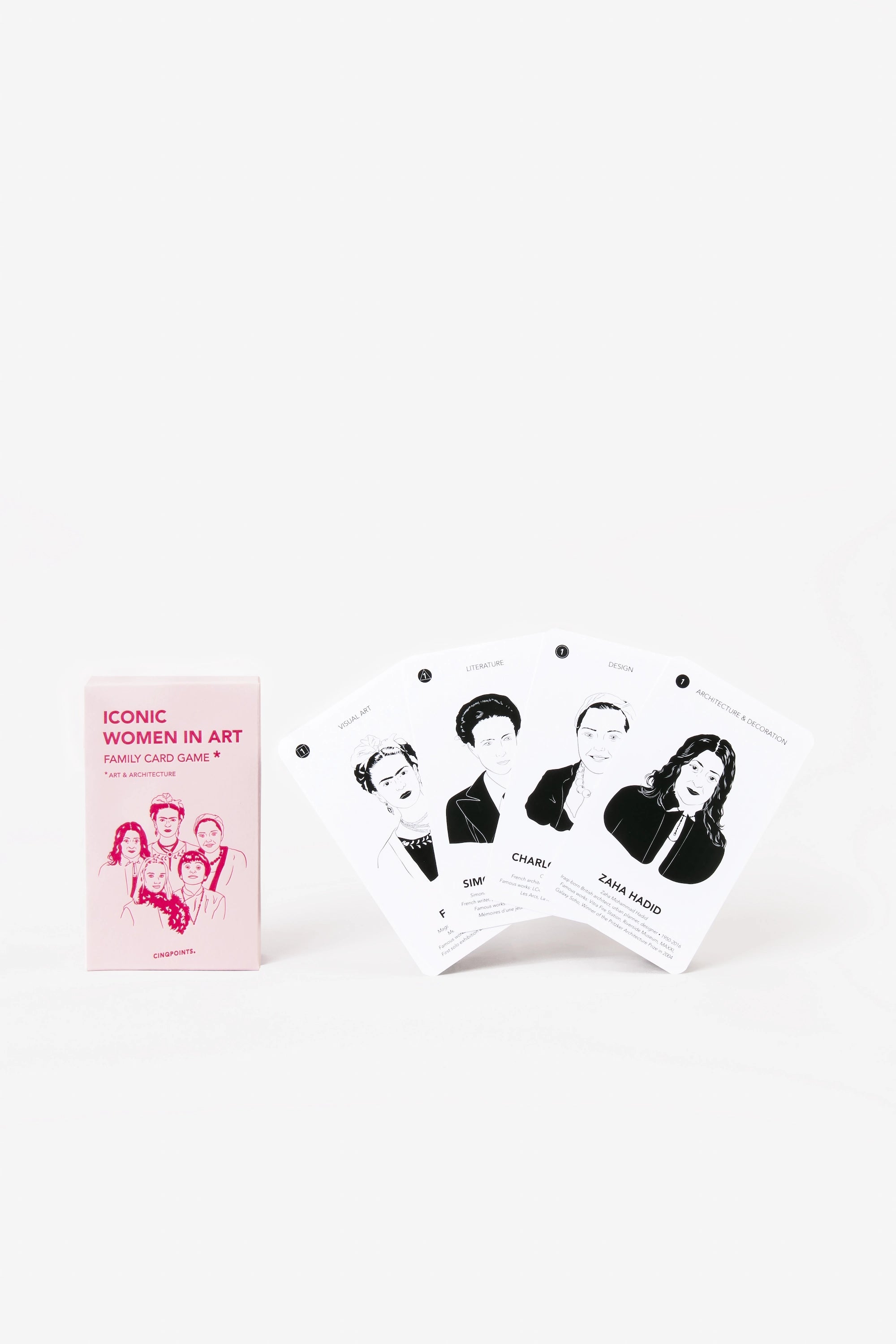
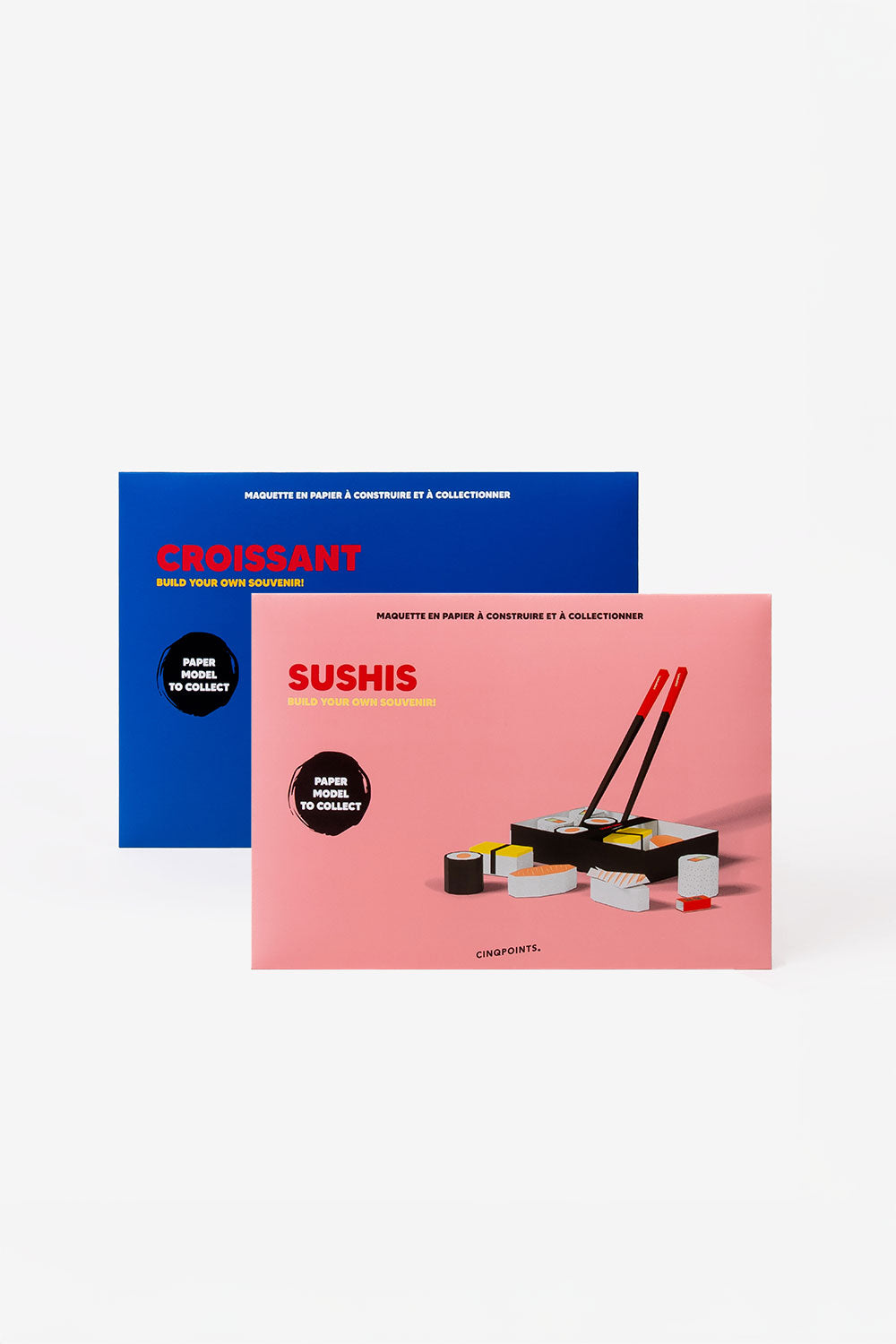
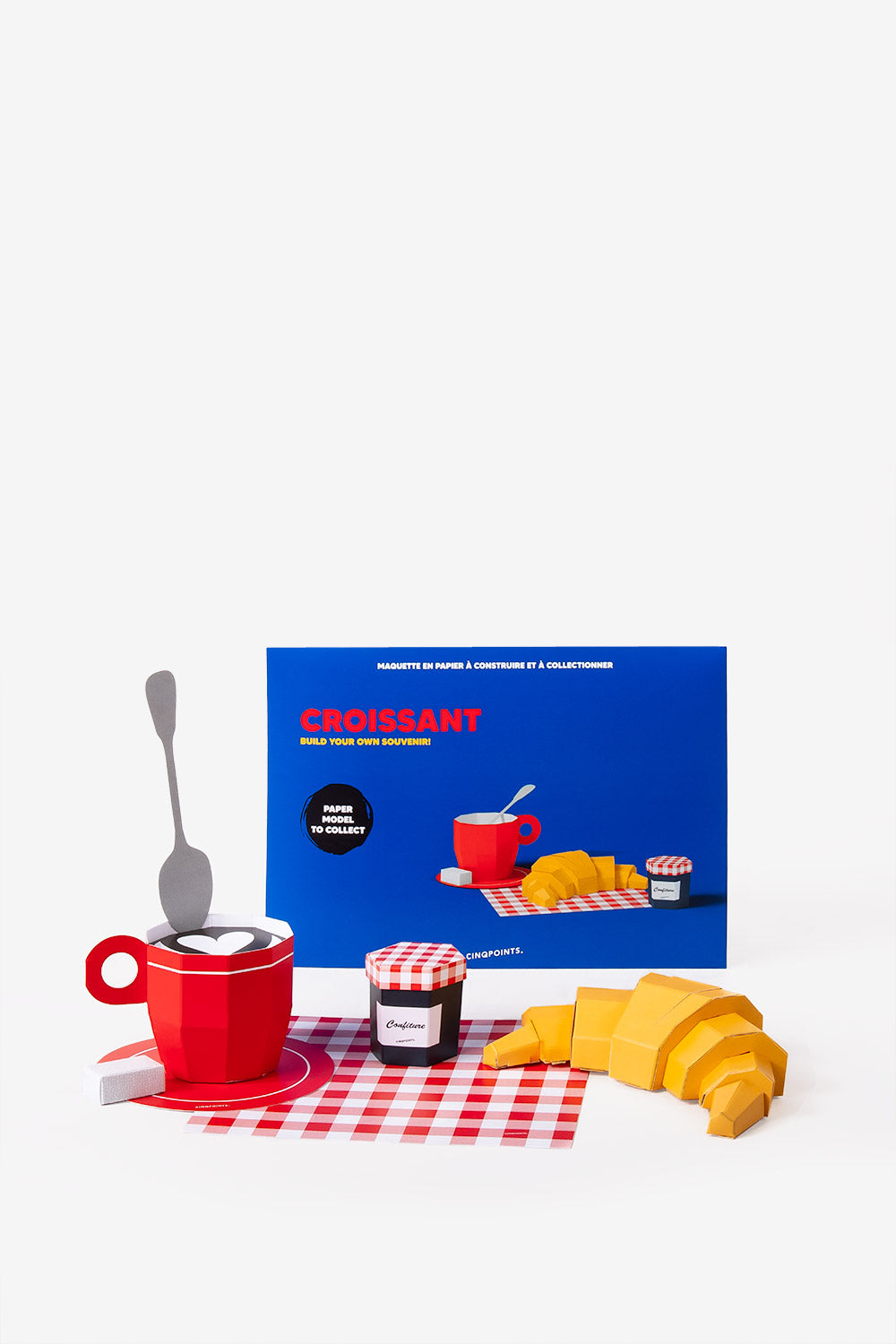
If you are visiting the Bourse de Commerce, make sure to stop by the museum bookshop — you will find a selection of Cinqpoints products there, including our art and artist card games. A way to extend the visit, and take something lasting home with you.