




Two centuries after the first image was fixed by Nicéphore Niépce, photography celebrates its bicentennial. It is an opportunity to revisit some of the gazes that have changed the way we see the world, and to discover one of the great autumn exhibitions in Paris.
1826, a window in Burgundy
It all begins with a view of rooftops. From the window of his house in Saint-Loup-de-Varennes, near Chalon-sur-Saône, Nicéphore Niépce fixed what he saw before him onto a pewter plate coated with bitumen of Judea: a pigeon house, a roof, and a patch of sky. The exposure lasted hours, perhaps days. The image is blurry, almost abstract. Above all, it is the oldest surviving photograph. Sources date it to 1826 or 1827.

Thirteen years later, in 1839, the French state announced Louis Daguerre's process and offered it to the world. Photography became a language, then an art, then a way of looking.

Remember Me: two centuries of images at the Bourse de Commerce
For this bicentennial, the Bourse de Commerce is dedicating its entire building to photography. The exhibition brings together approximately 700 works by more than 70 artists from the Pinault Collection. Its title comes from a work by Barbara Kruger, which occupies the Rotunda with the largest installation she has ever created in France.
The tour does not follow a chronological order: it creates a dialogue between eras and genres around a common theme: memory. A unique installation by Irving Penn brings together more than 400 photographs, alongside an iconic series by Raymond Depardon. Visitors will also encounter Gustave Le Gray, Cindy Sherman, Wolfgang Tillmans, Man Ray, and Dorothea Lange.

Capturing the moment: Henri Cartier-Bresson and Robert Doisneau
In 1952, Henri Cartier-Bresson published Images à la sauvette, which the American edition translated as The Decisive Moment. The expression became a doctrine: the instant where form, light, and gesture align, and which must be captured without being provoked. Co-founder of the Magnum agency in 1947, he shaped the vision of generations of photographers.
In Provence, the Caumont-Centre d’Art is dedicating its winter exhibition to him, from November 5, 2026, to March 21, 2027. Organized with the Henri Cartier-Bresson Foundation, it follows the European wanderings of the "eye of the century," who continuously traveled the continent for nearly seventy years, blending his most famous images with rarely shown photographs.
As for Robert Doisneau, he was a wanderer. His Parisians, his suburbs, and his children leaving school compose a poetry of the everyday. His Kiss by the Hôtel de Ville (1950), which has become one of the most reproduced images in the world, was nonetheless a staged scene, created for Life magazine. A story that reminds us that photography has always played with the boundary between reality and its staging.

Bearing witness: Dorothea Lange and Walker Evans
In the 1930s, the American administration tasked photographers with documenting the Great Depression. In 1936, Dorothea Lange brought back Migrant Mother: a mother with a worried gaze, surrounded by her children, in a camp for field workers in California. The image became the face of an era.
Walker Evans worked within the same framework, with a more direct and sober approach. His portraits of sharecroppers in Alabama, published with text by James Agee in Let Us Now Praise Famous Men (1941), established a stripped-down documentary style whose influence remains immense.
Traversing the century: Lee Miller
A model for Vogue, student and then partner of Man Ray in Paris, and a surrealist photographer, Lee Miller became a war correspondent in 1944. She followed Allied troops, witnessed the liberation of the camps, and had herself photographed in Hitler's bathtub in Munich in April 1945. Few lives summarize the transformations of the medium in the 20th century as well as hers. [our article dedicated to Lee Miller]
Looking differently: Diane Arbus, Hilla Becher, Agnès Varda
Diane Arbus left fashion photography to photograph those who go unnoticed: outcasts, twins, circus performers, and ordinary families. Her direct images, in square format, are as disturbing as they are touching.
With Bernd Becher, Hilla Becher spent over forty years photographing water towers, blast furnaces, and silos. Presented in grids, these "typologies" transform industrial architecture into anonymous sculptures. Their teaching in Düsseldorf trained Andreas Gursky, Thomas Ruff, and Thomas Struth.

Before becoming a filmmaker, Agnès Varda was a photographer, notably for Jean Vilar's Théâtre National Populaire. This photographic gaze permeates all of her work, right up to her final films.
A history to play with
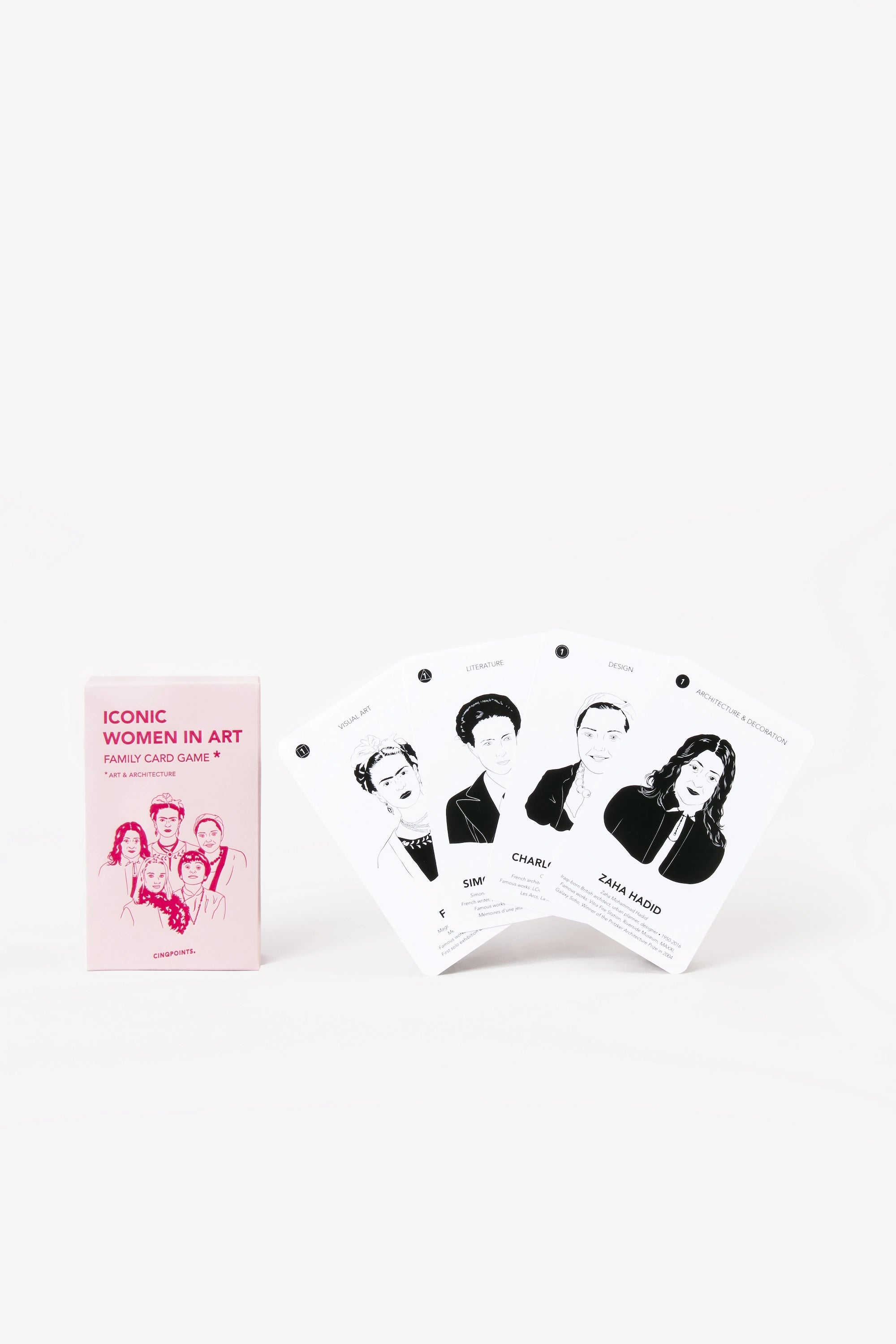
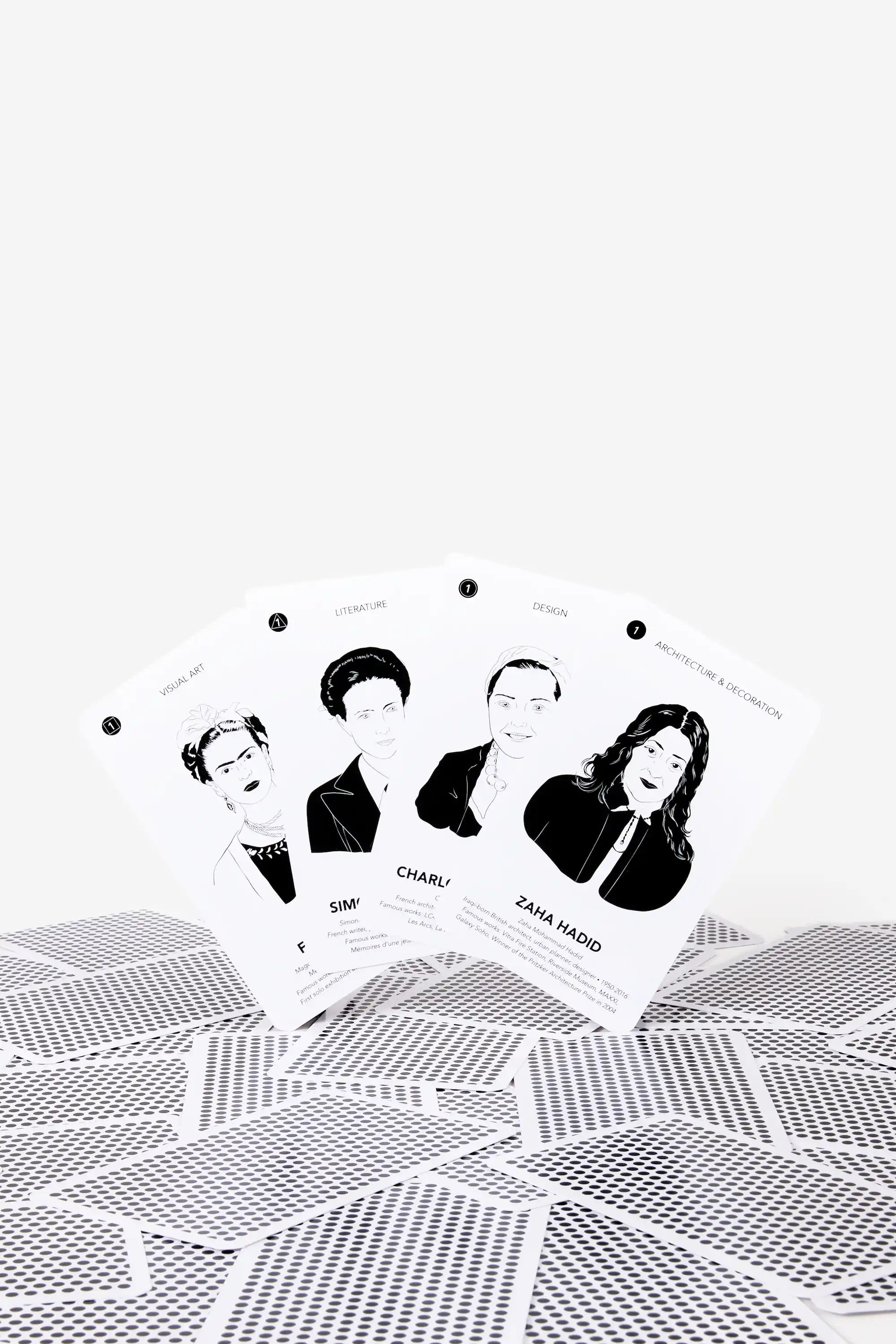
These photographers feature in our card games. Henri Cartier-Bresson, Robert Doisneau, Walker Evans, and Diane Arbus belong to the Photo & Video family of Iconic Artists 20th Century [link]. Dorothea Lange, Lee Miller, Hilla Becher, Agnès Varda, and Diane Arbus belong to the Iconic Women in Art family [link]. Two ways to extend the exhibition, with family or friends, while learning to recognize those who taught the century how to look at itself.

Practical Information
Remember Me, Bourse de Commerce – Pinault Collection, 2 rue de Viarmes, Paris 1st. Open from 11 a.m. to 7 p.m., until 9 p.m. on Fridays, closed Tuesdays; full price €15, reduced price €10. Free late-night opening on the first Saturday of the month, from 5 p.m. to 9 p.m.
You will find works by: Laure Albin Guillot / Manuel Alvarez Bravo / Eugène Atget / Richard Avedon / Edmond Bacot / Cecil Beaton / Werner Bischof / Erwin Blumenfeld / Constantin Brancusi / Steffi Brandl / Claude Cahun / Julia Margaret Cameron / George Frederic Cannons / Robert Capa / Henri Cartier-Bresson / Maurizio Cattelan / Coleman Collins / Robert Cumming / Imogen Cunningham / Raymond Depardon / Máté Dobokay / Robert Doisneau / František Drtikol / Pierre Dubreuil / Guillaume Duchenne de Boulogne / John Edmonds / El Lissitzky / Walker Evans / Roger Fenton / Jaromír Funke / Maurice Goldberg / Nan Goldin / Horst P. Horst / Peter Hujar / Constantin Joffé / André Kertész / Rudolf Koppitz / Tarrah Krajnak / Barbara Kruger / Germaine Krull / Dorothea Lange / Louise Lawler / Gustave Le Gray / Annie Leibovitz / Zoe Leonard / Sherrie Levine / Dora Maar / Man Ray / Boris Mikhaïlov / Lee Miller / Tyler Mitchell / Zanele Muholi / Ugo Mulas / Youssef Nabil / Lusha Nelson / Helmut Newton / Meret Oppenheim / Paul Outerbridge / Irving Penn / Eileen Quinlan / Wladimir Rehbinder / Jack Robinson / Aleksandr Rodchenko / August Sander / Francesco Scavullo / Sherril Schell / Karl Schenker / Ernst Schneider / Cindy Sherman / Dayanita Singh / Edward Steichen / Alfred Stieglitz / Paul Strand / Paul Stone Raymor / Hiroshi Sugimoto / Wolfgang Tillmans / Deborah Turbeville / Danh Võ / Weegee / Edward Weston / Francesca Woodman.
Curatorship: Matthieu Humery, photography advisor, Pinault Collection with the collaboration of Lola Regard, project manager.